Case Studies
The Control Room
OPERATIONAL CLARITY.
What it looks like when construction operations get organized. Four problems I've solved. Three you can click into right now.
Reference builds are working systems on synthetic data: the Bleeding Report and the Stack Audit recreate tools I ran inside a six-company construction group, and the Holdback Tracker previews a module in build for a live client today. The metrics on reference builds describe what the system does, not results I'm claiming.
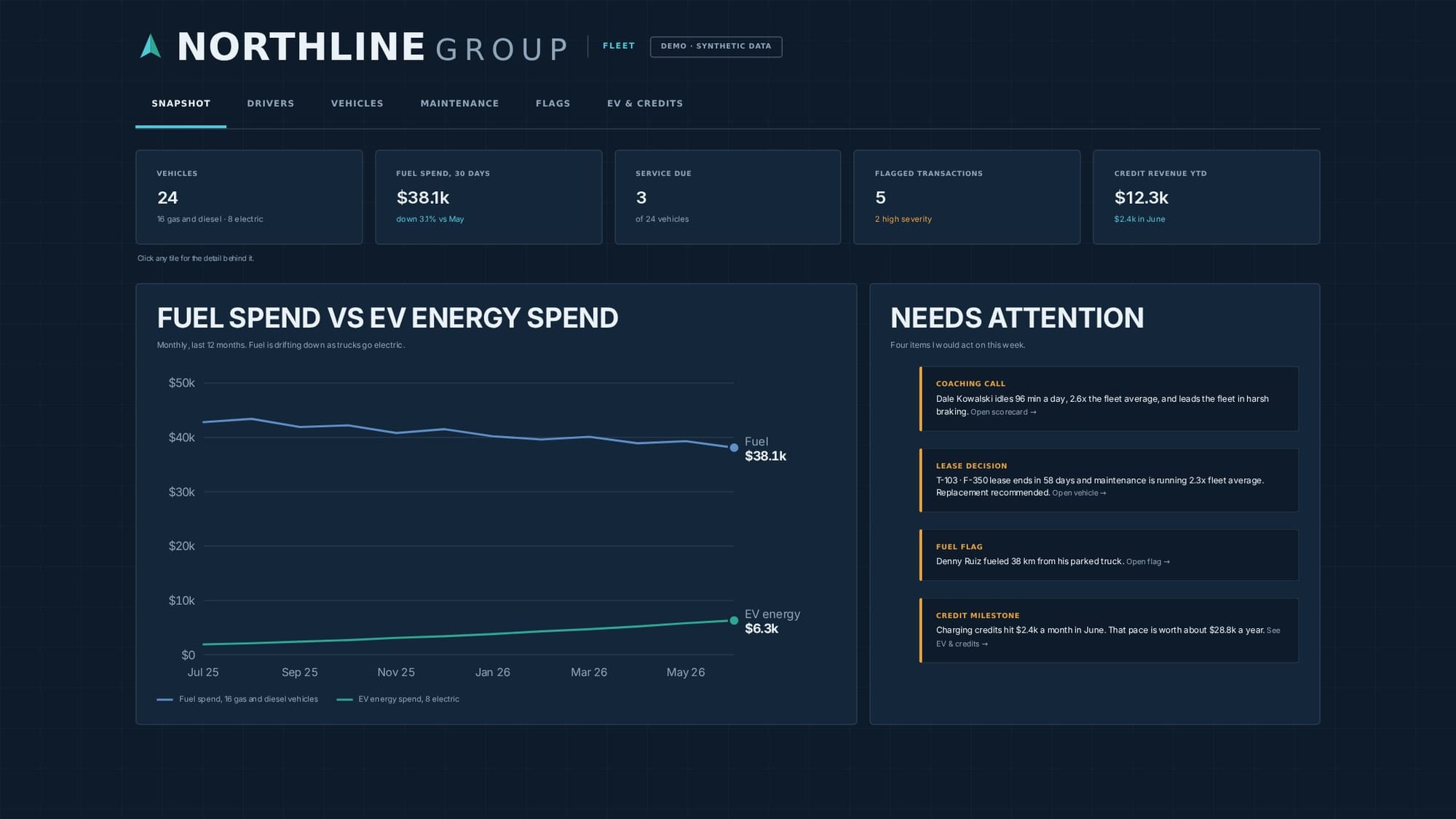
GROUP FLEET OPERATIONS
Seven brands, two provinces, and the fleet run out of fuel-card statements.
I'm building them one connected system. The fleet module runs in production today: fuel costs, driver scorecards, flagged transactions, and the credit revenue their EV chargers earn.
The demo is the real module rebuilt on synthetic data, in a fictional brand.
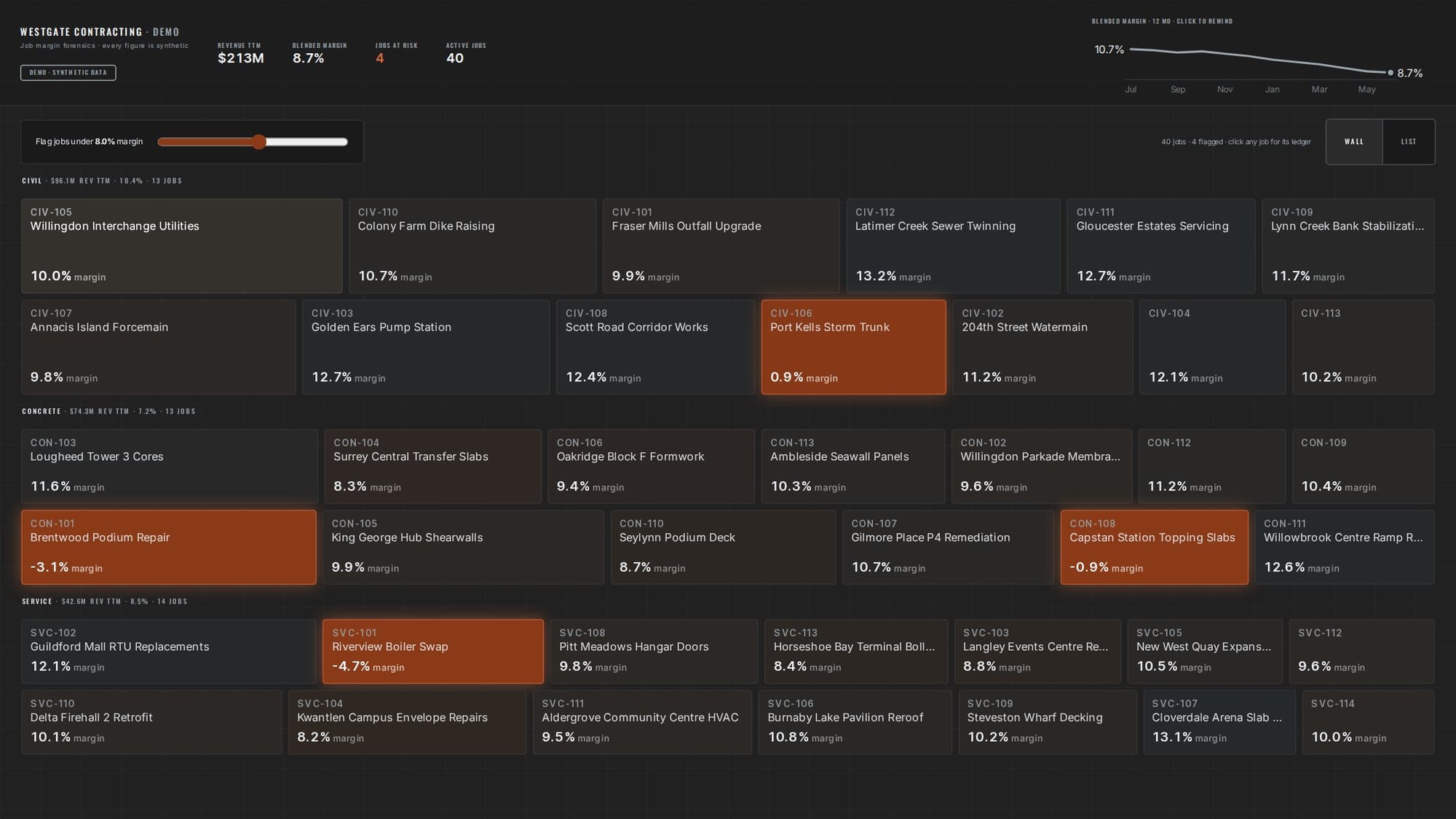
THE BLEEDING REPORT
Revenue up, profit slipping, and nobody could say which job was doing the damage.
Every job on one wall, and the bleeders glow copper. Two clicks from company health to the exact cost code that's over, with the PM who runs it.
Originally a BI report. Rebuilt from scratch: what you click is code I wrote.
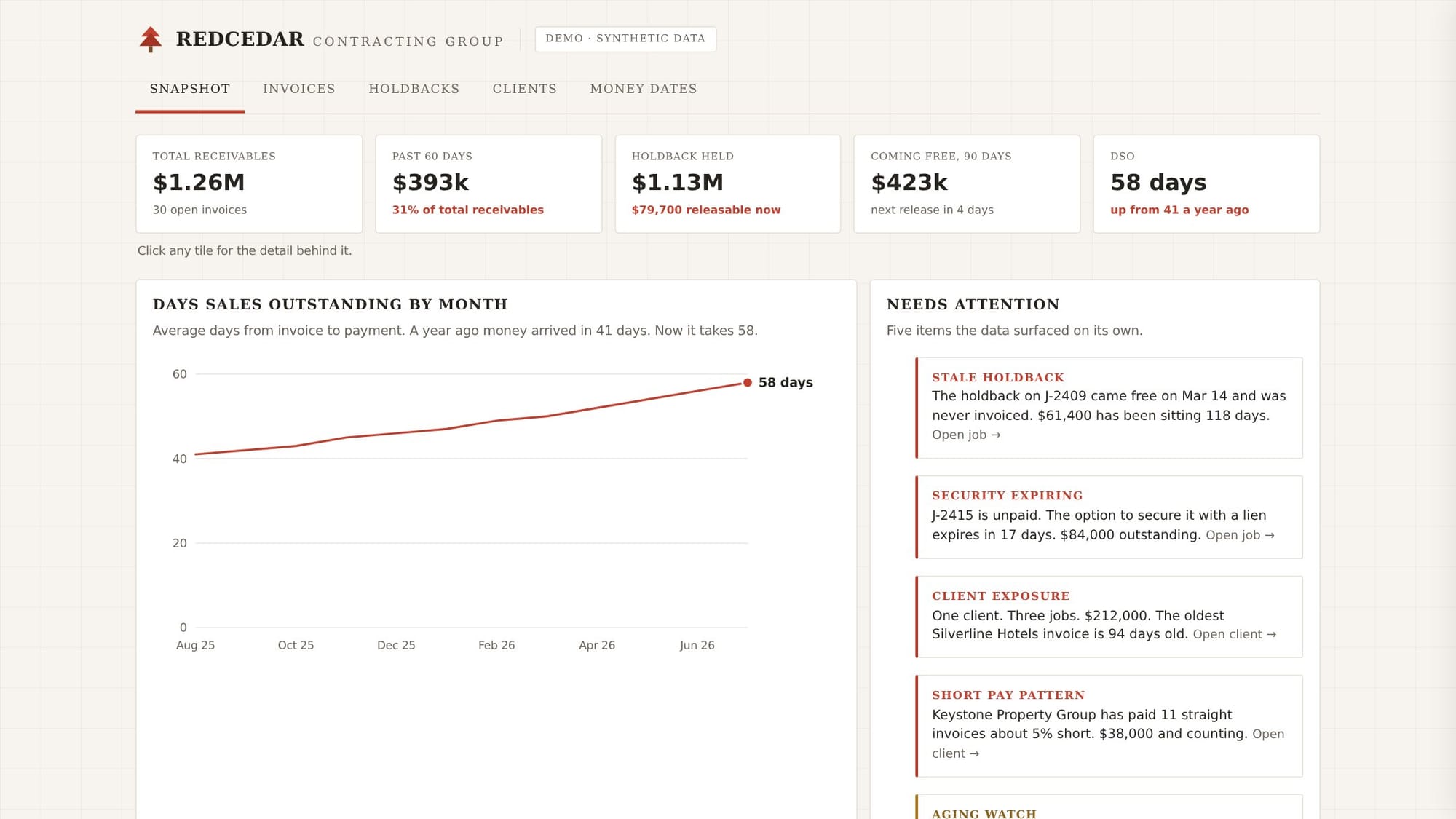
THE HOLDBACK TRACKER
The holdback came free in March. Nobody invoiced it.
BC holds back 10 percent of every construction invoice by law. This tracker counts down every release date and surfaces the money nobody asked for: stale holdbacks, short-paying clients, receivables about to cross 90 days.
Built in a fictional brand on synthetic data. The production version is in build for a live client right now.
The Stack Audit
THE STACK AUDIT
Forty-some subscriptions, shadow accounts the CFO had never heard of, and real work happening in WhatsApp.
A 30-day audit: duplicates cancelled, shadow tools replaced, single sign-on and MFA across what survived. Six figures off annual subscription spend.